Author

Nannie

Browsing

Critical thinking and problem-solving skills are essential for students to succeed in today’s complex and rapidly changing world. As the job market becomes increasingly competitive, employers are looking for candidates who can think critically and solve problems effectively. In this article, we will discuss the importance of teaching critical thinking and problem-solving skills and how educators can incorporate these skills into their teaching.

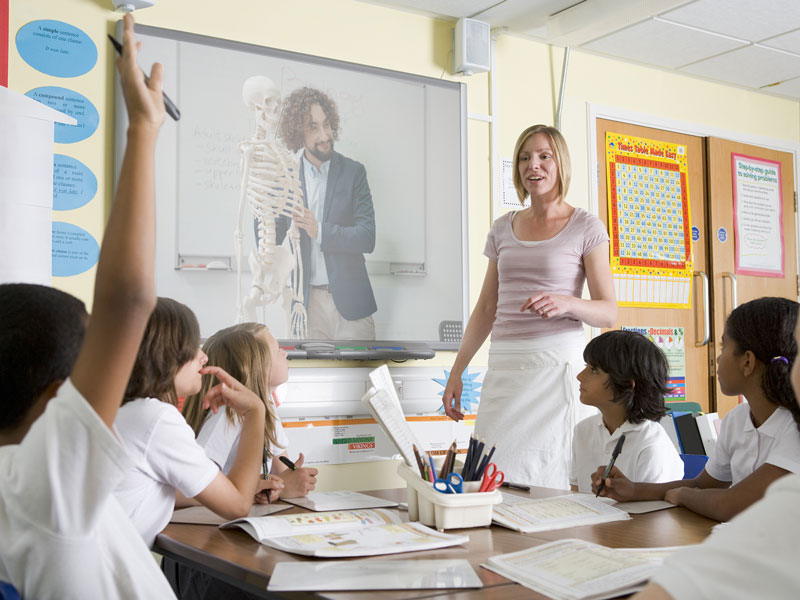
Changes in education as a result of COVID-19 crisis are here to stay, experts say – EURACTIV.com

What are Critical Thinking and Problem-Solving Skills?

Critical thinking is the ability to analyze information, evaluate arguments, and make logical decisions. It involves questioning assumptions, identifying biases, and considering multiple perspectives. Problem-solving is the ability to identify, analyze, and solve problems using critical thinking skills.

Why are Critical Thinking and Problem-Solving Skills Important?

Critical thinking and problem-solving skills are important for several reasons. First, they help students become independent learners who can think for themselves and make informed decisions. Second, these skills are essential for success in the workplace. Employers are looking for candidates who can think critically and solve problems effectively. Third, critical thinking and problem-solving skills are necessary for personal growth and development. They help individuals become better decision-makers and problem-solvers, which can lead to a more fulfilling life.

How can Educators Incorporate Critical Thinking and Problem-Solving Skills into their Teaching?

There are several ways educators can incorporate critical thinking and problem-solving skills into their teaching. First, they can create a classroom environment that encourages students to ask questions, challenge assumptions, and consider multiple perspectives. Second, they can provide opportunities for students to practice critical thinking and problem-solving skills through class discussions, group work, and real-world scenarios. Third, educators can use technology to enhance critical thinking and problem-solving skills by incorporating interactive learning activities and simulations.

Critical thinking and problem-solving skills are essential for success in today’s complex and rapidly changing world. Educators have a vital role to play in teaching these skills to students. By creating a classroom environment that encourages critical thinking and problem-solving, providing opportunities for practice, and incorporating technology, educators can help students develop the skills they need to succeed in school and beyond.

As parents, we all want our children to succeed academically and achieve their full potential. While teachers and schools play an important role in shaping a child’s education, research has shown that the most significant factor in a child’s success is parental involvement.

What is Parental Involvement?

Parental involvement refers to the participation of parents in their child’s education both at school and at home. This includes attending parent-teacher conferences, volunteering at school, helping with homework, and encouraging good study habits.

The Benefits of Parental Involvement

Studies have found that children whose parents are involved in their education have higher academic achievement, better attendance, and are more likely to graduate from high school and attend college.

  • Improved Academic Performance: When parents are involved in their child’s education, they can provide support and encouragement, which can lead to improved academic performance. They can also monitor their child’s progress and help them stay on track.
  • Better Attendance: Parents who are involved in their child’s education are more likely to ensure that their child attends school regularly. This is important because regular attendance is essential for academic success.
  • Higher Graduation Rates: Children whose parents are involved in their education are more likely to graduate from high school and attend college. This is because parental involvement helps to create a positive learning environment and encourages children to take their education seriously.

How to Get Involved in Your Child’s Education

Getting involved in your child’s education does not have to be difficult. Here are some simple ways to get started:

  1. Attend Parent-Teacher Conferences: Parent-teacher conferences are a great way to meet your child’s teacher and learn about their progress. It also gives you the opportunity to ask questions and discuss any concerns you may have.
  2. Volunteer at School: Many schools welcome parent volunteers. This could include helping out in the classroom, chaperoning field trips, or assisting with school events.
  3. Help with Homework: Taking an interest in your child’s homework can help them stay focused and motivated. It also provides an opportunity for you to help them if they are struggling with a particular topic.
  4. Encourage Good Study Habits: Setting aside a designated time and place for homework and studying can help your child develop good study habits. It is also important to create a positive learning environment at home by providing the necessary resources and support.

Parental involvement is a crucial factor in a child’s educational success. By getting involved in your child’s education, you can help them achieve their full potential and create a positive learning environment. Remember, every little bit of involvement can make a big difference in your child’s academic success.

Cultural diversity is an essential aspect of modern society. In today’s increasingly globalized world, cultural diversity has become an integral part of education. It is important for educators to understand the impact of cultural diversity on education to create a more inclusive and equitable learning environment for all students. In this article, we will explore the impact of cultural diversity in education and how it influences student learning and academic success.

K-12 Education Distance Learning Solution | Lumens

What is Cultural Diversity in Education?

Cultural diversity in education refers to the inclusion of students from different cultural backgrounds, ethnicities, religions, and nationalities in the classroom. It is an approach that recognizes and values the diversity of students and their unique experiences, perspectives, and cultures.

Cultural diversity in education not only creates a more inclusive classroom environment but also prepares students to live and work in a diverse and globalized world. It helps students develop empathy, understanding, and respect for different cultures and perspectives.

Impact of Cultural Diversity in Education

The impact of cultural diversity in education can be seen in various aspects of student learning and academic success. Let’s explore some of the key impacts:

1. Improved Academic Achievement

Research has shown that cultural diversity in education can lead to improved academic achievement for students. A diverse classroom environment exposes students to different perspectives and ideas, which can enhance their critical thinking and problem-solving skills.

Moreover, students from diverse backgrounds bring unique experiences and knowledge to the classroom, which can enrich the learning experience for all students. This can lead to improved academic performance, as students are more engaged and motivated to learn.

2. Increased Cultural Awareness

Cultural diversity in education helps students develop a better understanding and appreciation of different cultures. It promotes cultural awareness and sensitivity, which are essential skills for living and working in a diverse and globalized world.

Through exposure to different cultures and perspectives, students can learn to recognize and challenge stereotypes and biases, and develop a more inclusive worldview.

3. Enhanced Social Skills

Cultural diversity in education can also enhance students’ social skills. In a diverse classroom environment, students learn to interact and communicate with people from different backgrounds and cultures.

This can help develop their social skills such as empathy, communication, and conflict resolution. It also prepares them for a diverse workplace where they may need to collaborate with colleagues from different backgrounds and cultures.

Cultural diversity in education is essential for creating an inclusive and equitable learning environment for all students. It has a positive impact on student learning and academic success, as well as developing crucial skills such as cultural awareness and social skills.

Educators must recognize the importance of cultural diversity in education and strive to create a classroom environment that values and respects diversity. By doing so, they can prepare students for a diverse and globalized world and help create a more just and equitable society.

Project-based learning (PBL) is a teaching method that emphasizes real-world applications and problem-solving. Rather than relying solely on traditional lectures and tests, PBL encourages students to actively engage in their own learning through hands-on projects that require them to apply critical thinking and problem-solving skills.

The benefits of project-based learning

There are many benefits to using PBL in the classroom. One of the biggest advantages is that it helps to engage students in their own learning by providing them with real-world applications that are relevant to their lives. This can lead to increased motivation and a deeper understanding of the material being taught.

PBL also helps to develop important skills such as critical thinking, problem-solving, collaboration, and communication. These skills are essential in today’s rapidly changing world, where students need to be able to adapt to new situations and think creatively in order to succeed.

How to implement project-based learning

Implementing PBL in the classroom requires careful planning and preparation. Here are some tips to help get you started:

  • Choose a topic or theme that is relevant to your students’ lives and interests.
  • Provide clear guidelines and expectations for the project, including deadlines and grading criteria.
  • Encourage students to work in groups and collaborate on their projects.
  • Provide resources and support throughout the project, including access to technology and materials.
  • Allow for flexibility and creativity, and be open to unexpected outcomes.

Examples of project-based learning

There are many different types of projects that can be used in PBL, depending on the subject and grade level. Here are a few examples:

  1. Design a sustainable garden: Students research and design a garden that uses sustainable practices such as composting and rainwater harvesting.
  2. Create a podcast: Students research and produce a podcast on a topic of their choice, incorporating interviews and other audio elements.
  3. Build a model city: Students work in groups to design and build a model city, incorporating elements of urban planning and architecture.

These are just a few examples of the many different types of projects that can be used in PBL. The key is to choose a project that is relevant and engaging for your students, and to provide them with the support and resources they need to succeed.

Project-based learning is a powerful teaching method that can help to engage students in their own learning and develop important skills such as critical thinking and problem-solving. By providing real-world applications and opportunities for collaboration and creativity, PBL can help to prepare students for success in today’s rapidly changing world.

Education is an essential aspect of life that shapes individuals into responsible and productive members of society. However, traditional education systems often focus solely on academic achievement, neglecting the importance of emotional, social, and spiritual development. In response to this, a holistic education model has emerged, emphasizing the interconnectedness of all aspects of learning. Here are some of the benefits of a holistic education model:

1. Encourages Personal Growth

A holistic education model recognizes that individuals are complex beings with unique abilities and strengths. As such, it prioritizes the development of the whole person, providing opportunities for personal growth in various areas such as emotional, social, spiritual, and physical well-being. This approach enhances self-awareness and encourages individuals to reach their full potential.

2. Fosters Critical Thinking Skills

A holistic education model emphasizes critical thinking and problem-solving skills. Students are encouraged to explore different perspectives and think creatively, enabling them to approach problems with an open mind. This approach fosters a deep understanding of complex issues and prepares students for real-world challenges.

3. Promotes Collaboration and Teamwork

In a holistic education model, collaboration and teamwork are encouraged. Students work together to solve problems and achieve shared goals, emphasizing the importance of communication and cooperation. This approach prepares students for the collaborative nature of the workforce, where teamwork is essential for success.

4. Builds Resilience and Coping Skills

A holistic education model recognizes that life is full of challenges and setbacks. As such, it provides students with opportunities to develop resilience and coping skills to overcome obstacles. By promoting emotional and spiritual well-being, students learn to manage stress and maintain a positive outlook, enhancing their ability to navigate difficult situations.

5. Enhances Creativity and Innovation

A holistic education model values creativity and innovation, encouraging students to explore their creativity and express themselves. This approach fosters a love for learning and enables students to think outside the box, leading to innovative solutions to complex problems.

6. Develops a Global Perspective

A holistic education model recognizes the interconnectedness of the world and the importance of cultural understanding. Students are exposed to different cultures, languages, and perspectives, enhancing their global awareness and empathy towards others. This approach prepares students to become global citizens who can navigate diverse cultures and work in a globalized workforce.

A holistic education model provides numerous benefits that traditional education systems often neglect. By prioritizing the development of the whole person, this approach enhances personal growth, critical thinking skills, collaboration and teamwork, resilience and coping skills, creativity and innovation, and a global perspective. As such, it prepares students for success in all aspects of life, enabling them to become responsible and productive members of society.

Gamification is the process of adding game-like elements to non-game activities to make them more engaging and interactive. In recent years, gamification has gained popularity in education as a way to transform traditional learning experiences into more immersive and enjoyable ones. By incorporating elements of games, such as points, badges, and leaderboards, educators can motivate and engage students in a way that traditional teaching methods often fail to do.

Why Choose Online Learning | MaSmithers

The Benefits of Gamification in Education

There are several benefits to incorporating gamification into education:

  • Increased engagement: Games are inherently engaging and can capture students’ attention in a way that traditional teaching methods often can’t.
  • Motivation: By incorporating elements such as points and badges, students are motivated to perform better and achieve higher levels.
  • Personalization: Games can be customized to meet the needs of individual students, allowing for personalized learning experiences.
  • Instant feedback: Games provide instant feedback, allowing students to see the results of their actions immediately and adjust their strategies accordingly.
  • Collaboration: Many games require collaboration and teamwork, promoting social interaction and communication skills.

Examples of Gamification in Education

There are many ways that gamification can be incorporated into education:

  • Language learning: Language learning apps such as Duolingo use gamification to make learning a new language fun and engaging.
  • STEM education: Games such as Minecraft and Kerbal Space Program can be used to teach science, technology, engineering, and math concepts.
  • History: Games such as Assassin’s Creed and Civilization can be used to teach history and social studies concepts.
  • Classroom management: Teachers can use gamification to encourage positive behavior and reward students for good behavior.

Challenges of Gamification in Education

While gamification has many benefits, there are also some challenges to implementing it in education:

  • Cost: Developing educational games can be expensive and time-consuming.
  • Integration: Integrating gamification into existing curricula and teaching methods can be challenging.
  • Effectiveness: The effectiveness of gamification in education is still being studied, and there is limited research on its long-term impact on student learning.
  • Overuse: Overusing gamification can lead to students becoming desensitized to the rewards and losing interest in the learning material.

Gamification has the potential to transform traditional learning experiences by making them more engaging, interactive, and enjoyable. However, there are also challenges to implementing gamification in education, such as cost, integration, and effectiveness. Educators must carefully consider these factors and ensure that gamification is used in a way that enhances student learning and engagement, rather than becoming a distraction or hindrance.

Creativity is an essential aspect of human existence, and it plays a significant role in learning and cognitive development. It is not just about art and design; creativity is a skill that can be applied to any field, including science, technology, engineering, and mathematics (STEM) subjects. Creativity is not just about being imaginative; it is about thinking differently and finding innovative solutions to problems.

What is Creativity?

Creativity is the ability to generate new ideas, concepts, or solutions to problems. It involves using the imagination and thinking outside of the box to create something new and unique. Creativity is not just about being artistic or musical; it is a skill that can be applied to any field.

Changes in education as a result of COVID-19 crisis are here to stay,  experts say – EURACTIV.com

The Role of Creativity in Learning

Creativity plays a crucial role in learning. When students are encouraged to think creatively, they are more engaged and motivated to learn. Creativity helps students to explore and experiment with new ideas, which leads to a deeper understanding of the subject matter. It also helps students to develop critical thinking skills, problem-solving skills, and the ability to think outside of the box.

Creativity in learning can take many forms, such as brainstorming sessions, group discussions, and project-based learning. These activities encourage students to work collaboratively and think creatively to come up with innovative solutions to problems.

The Role of Creativity in Cognitive Development

Creativity also plays a significant role in cognitive development. When individuals engage in creative activities, such as drawing, painting, or writing, it stimulates the brain and enhances cognitive function. Creative activities require individuals to use their imagination, memory, and attention, which helps to improve cognitive function and memory retention.

Creativity also helps individuals to develop emotional intelligence and social skills. Creative individuals are better at expressing their emotions and communicating with others effectively. They are also more empathetic and have a better understanding of other people’s perspectives.

Creativity is an essential aspect of human existence, and it plays a significant role in learning and cognitive development. It is not just about art and design; creativity is a skill that can be applied to any field. Creativity helps to enhance critical thinking skills, problem-solving skills, and the ability to think outside of the box. It also helps to improve cognitive function, memory retention, emotional intelligence, and social skills. Therefore, it is crucial to encourage creativity in education and everyday life to promote holistic growth and development.

Learning is a fundamental part of human life. It is the process by which individuals acquire knowledge, skills, and experience. The way in which we learn is influenced by various factors, including our cognitive abilities, emotions, and environment. Neuroscience has provided insights into how the brain processes information and how this can be used to develop effective learning strategies. In this article, we will explore the neuroscience behind effective learning strategies.

The Brain and Learning

The brain is the most important organ involved in the learning process. It is responsible for processing and storing information, as well as for regulating emotions and behavior. The brain is made up of various parts, each with its own function. The prefrontal cortex, for example, is involved in executive functions such as decision-making, attention, and working memory. The hippocampus is responsible for the formation of new memories, while the amygdala is involved in emotional processing.

Learning occurs when new information is processed and integrated into existing knowledge. This process involves the activation of various regions of the brain. The prefrontal cortex is activated when attention and working memory are required, while the hippocampus is activated when new information is being encoded. The amygdala is activated when emotions are involved in the learning process.

Effective Learning Strategies

Effective learning strategies are those that take advantage of the way in which the brain processes information. These strategies are designed to enhance attention, facilitate encoding and retrieval of information, and regulate emotions. Some effective learning strategies include:

  • Spaced repetition: This involves reviewing information at spaced intervals to enhance retention.
  • Active learning: This involves actively engaging with the material, such as through discussion or practice.
  • Visualization: This involves creating mental images to enhance encoding and retrieval of information.
  • Multisensory learning: This involves engaging multiple senses, such as sight, sound, and touch, to enhance encoding and retrieval of information.
  • Emotional regulation: This involves regulating emotions to enhance attention and facilitate encoding and retrieval of information.

The Importance of Sleep

Sleep is also an important factor in the learning process. During sleep, the brain consolidates and strengthens memories. This process is known as memory consolidation. Lack of sleep can impair memory consolidation, leading to decreased retention of information. It is therefore important to get adequate sleep in order to optimize the learning process.

Neuroscience has provided insights into how the brain processes information and how this can be used to develop effective learning strategies. Effective learning strategies are those that take advantage of the way in which the brain processes information, such as spaced repetition, active learning, visualization, multisensory learning, and emotional regulation. Sleep is also an important factor in the learning process, as it allows for memory consolidation. By understanding the neuroscience behind effective learning strategies, we can optimize the learning process and enhance our ability to acquire knowledge, skills, and experience.

Personalized learning is a teaching approach that tailors education to the specific needs, strengths, and weaknesses of each student. Instead of a one-size-fits-all approach, students receive individualized attention and instruction that is customized to their learning style, pace, and interests. Here are some of the many benefits of personalized learning approaches:

1. Improved Engagement and Motivation

Personalized learning helps to improve student engagement and motivation by making learning more relevant and meaningful. Students are more likely to be invested in their education when they feel that it is tailored to their interests and needs. This can lead to increased participation, better attendance, and a more positive attitude towards learning.

Education

2. Increased Achievement and Mastery

When students receive personalized instruction, they are more likely to achieve mastery of the subject matter. This is because the instruction is tailored to their specific needs and learning style, which can help them to understand and retain the material more effectively. As a result, personalized learning approaches can lead to higher test scores, better grades, and greater academic success.

3. Greater Flexibility and Adaptability

Personalized learning approaches provide greater flexibility and adaptability to meet the needs of individual students. This means that students can progress at their own pace, take breaks when needed, and focus on areas where they need more support. Teachers can also adapt their instruction to meet the needs of individual students, which can help to improve learning outcomes.

4. Improved Collaboration and Communication

Personalized learning approaches can also improve collaboration and communication skills. When students work in small groups or pairs, they can learn from one another and develop important social skills. Teachers can also use personalized learning approaches to facilitate communication between students, which can help to build stronger relationships and improve learning outcomes.

5. Increased Student Autonomy and Self-Direction

Personalized learning approaches can help to increase student autonomy and self-direction. When students are able to choose their own learning goals, they are more likely to be invested in their education and take ownership of their learning. This can help to develop important skills such as self-regulation, self-motivation, and self-efficacy.

Personalized learning approaches have many benefits for students, teachers, and schools. By tailoring instruction to the specific needs, strengths, and interests of individual students, personalized learning can improve engagement, increase achievement, provide greater flexibility, improve collaboration, and increase student autonomy. As a result, personalized learning approaches are becoming increasingly popular in schools and are likely to become even more important in the future.