
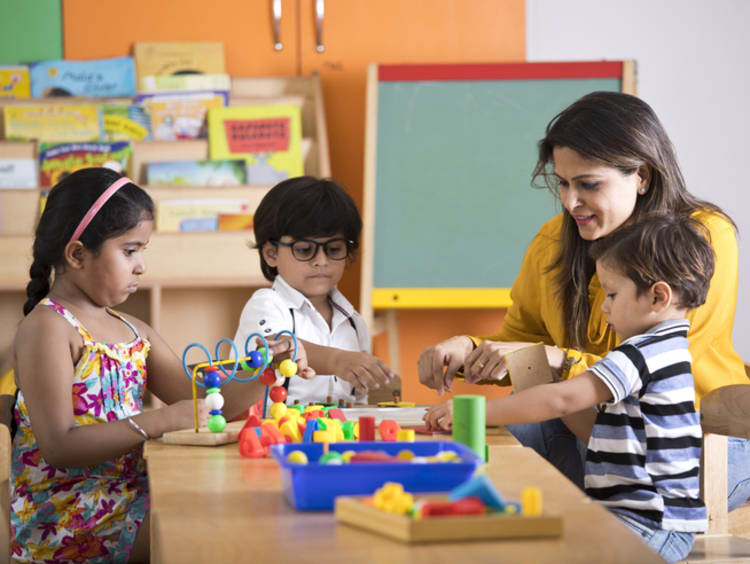
This guide explores the essential components of pre-primary success, from school readiness markers to sensory-rich classrooms, helping families choose a path that nurtures their child’s natural curiosity.
The transition from the home to a formal school environment is one of the most significant milestones in a child’s life. This “pre-primary” stage, encompassing nursery and kindergarten, serves as the critical bridge where children learn the foundational skills needed for academic success and social integration. In Nagpur, the focus on kindergarten education has shifted toward creating inclusive, child-centred environments that respect each individual’s unique developmental pace. By providing a balanced mix of structured activities and free play, these schools ensure that children develop a love for learning that will sustain them throughout their academic careers.
With the city’s rapid development, the options for quality early education in Nagpur have expanded to include both traditional institutions and modern, bilingual learning centres. These schools prioritise the development of “school readiness” the combination of cognitive, social, and motor skills needed to thrive in a Grade 1 classroom. For many families, the search for the perfect kindergarten involves looking for a school that offers a safe, hygienic, and intellectually stimulating environment.
Defining the Kindergarten Success Framework
A high-quality pre-primary classroom is an intentional space where every activity serves a developmental purpose. Parents evaluating the best kindergarten in Nagpur should observe how the environment facilitates independence and curiosity.
The Developmental Impact of Classroom Activities
|
What Parents See |
What It Develops in the Child |
|
Calm Routines |
Emotional security and self-regulation |
|
Songs & Storytelling |
Language acquisition and memory skills |
|
Art & Craft Time |
Fine motor skills and creative confidence |
|
Circle Time |
Social awareness and peer cooperation |
|
Counting Games |
Early numeracy and logical thinking |
|
Outdoor Free Play |
Physical coordination and body control |
|
Teacher as Guide |
Independence and curiosity-driven learning |
The Critical Role of Kindergarten in Development
The kindergarten years are a period of rapid linguistic and cognitive growth. High-quality primary schools in Nagpur with an integrated pre-primary wing ensure a seamless, stress-free transition. In 2026, the focus is on building “phonemic awareness” the ability to hear and manipulate sounds, alongside a sense of personal responsibility.
Essential “School Readiness” Markers for Grade 1
For a successful transition, top-tier Nagpur programmes focus on these core competencies:
- Cognitive Persistence: The ability to stay engaged with a task, such as a puzzle or a drawing, for at least 10-15 minutes.
- Social Navigation: Learning how to enter a playgroup, share resources, and use words to resolve minor peer conflicts.
- Self-Help Skills: The independence to manage personal belongings, use the restroom, and handle basic hygiene without constant assistance.
- Instructional Fluency: Understanding and following two-step instructions (e.g., “Please pick up the blocks and put them in the blue bin”).
Developing Motor Skills and Artistic Expression
Fine motor development is a key focus of the pre-primary years, as it is the foundation for writing and drawing. Leading schools utilise activities like beading, paper-tearing, and finger-painting to strengthen the small muscles in a child’s hands.
The Connection Between Art and Logical Growth
Artistic exploration in kindergarten is more than just a creative outlet; it is a cognitive exercise:
- Spatial Reasoning: Designing a collage or a clay model helps children understand depth, size, and orientation.
- Cause and Effect: Experimenting with colour mixing or different brush strokes teaches children how their actions change the environment.
- Aesthetic Confidence: Encouraging diverse artistic mediums fosters the problem-solving mindset needed for “thinking outside the box” in later life.
Social Integration and Conflict Resolution
One of the most important lessons learned in kindergarten is how to interact respectfully with others. Teachers play a vital role in modelling positive social behaviour. By learning how to resolve conflicts through dialogue and compromise, children develop the emotional intelligence needed for a harmonious social life. This focus on “character building” is what defines the most successful programmes.
Building Early Literacy and Numeracy
The pre-primary years are the time when the seeds of literacy and numeracy are planted. Instead of traditional worksheets, the best schools use “print-rich” environments and “math-talk” to introduce symbols and numbers. This conceptual approach ensures that children develop a deep and intuitive understanding of these core subjects before they reach the more formal primary grades.
Safety, Health, and Nutrition in Early Years
For parents, safety is paramount. Reputable schools maintain high standards of hygiene and provide child-safe infrastructure, with rounded furniture and non-toxic play materials. Regular health check-ups and a focus on personal hygiene teach children the importance of caring for their bodies. This comprehensive approach ensures that children are physically ready to handle the demands of a full school day.
Key Takeaways
- Pre-primary years form the emotional and cognitive bridge between home and formal schooling.
- School readiness includes persistence, independence, instruction-following, and peer interaction.
- Play-based and structured routines must coexist for balanced early development.
- Print-rich classrooms and phonemic awareness activities build strong literacy foundations.
- Early numeracy grows through counting games, pattern recognition, and daily math conversations.
- Fine motor development directly impacts writing confidence in primary grades.
- Social conflict resolution skills build long-term emotional intelligence.
- Safe, hygienic, child-friendly infrastructure is non-negotiable in early years education.
- Observational assessments are more developmentally appropriate than formal testing.
- A strong kindergarten foundation ensures a smoother transition into structured systems, such as the Central Board of Secondary Education curriculum, in later grades.
FAQs:
At what age is it ideal to start nursery or kindergarten in Nagpur?Most children begin nursery around 2.5 and 3 years and kindergarten between 3.5 and 5.5 years, but the best choice depends on your child’s language, social comfort, and independence skills.
How do I choose the best pre-primary or kindergarten school in Nagpur?Look for a safe, hygienic campus, trained early-years teachers, sensory-rich classrooms, a strong play-based routine, and a clear focus on school readiness (language, motor skills, social skills, and independence).
How do good kindergarten schools build early literacy without pressure?They use print-rich classrooms, storytelling, phonics readiness, rhymes, and conversation-based learning that improves phonemic awareness without over-relying on worksheets.
What safety, hygiene, and health standards should parents check in a kindergarten?
Prioritise child-safe furniture, non-toxic materials, clean washrooms, secure entry/exit, trained staff, first-aid readiness, and a visible routine for hygiene and health check-ups.

Comments are closed.